
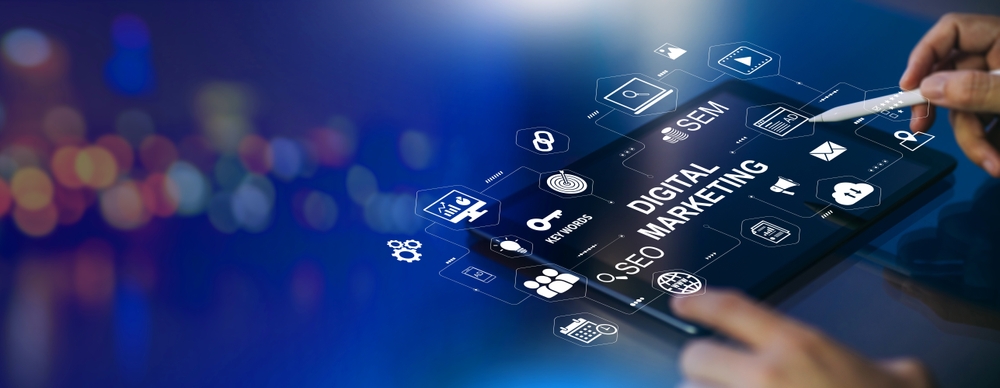
In the modern business landscape, the terms “Digital Marketing” and “Social Media Marketing” are often used interchangeably, yet they describe two distinct, though closely related, fields of practice. This confusion is understandable; both operate in the online sphere, and both are essential for modern business growth. However, equating the two is akin to equating a single instrument with an entire orchestra. Digital marketing is the all-encompassing strategy, the full orchestra of online tools and channels used to reach customers. Social media marketing is simply one powerful instrument within that orchestra, focusing specifically on platforms designed for social interaction. Understanding the fundamental difference between the two is critical for business leaders who must allocate resources effectively and build a truly comprehensive online strategy.
Digital marketing is the umbrella term that covers all marketing efforts that use an electronic device or the internet. Its goal is to connect with customers where they spend their time most: online. This expansive field includes every online action aimed at promoting products or services. Social media marketing, by contrast, is a specific discipline within that broader strategy, utilizing networks like Facebook, Instagram, LinkedIn, and TikTok to build communities, drive engagement, and convert followers into customers.
Digital Marketing: The Comprehensive Strategy
Digital marketing is defined by its comprehensive scope, integrating a wide range of tactics designed to bring users into the business’s orbit and guide them through the conversion funnel. It focuses on owned, earned, and paid online channels that may or may not involve social interaction.
The core components of a holistic digital marketing strategy include several key disciplines:
- Search Engine Optimization (SEO): The practice of optimizing website content and structure to rank higher in organic (non-paid) search engine results. This focuses on attracting users who are actively searching for a solution.
- Content Marketing: The creation and distribution of valuable, relevant, and consistent content (like blog posts, eBooks, and whitepapers) to attract and retain a clearly defined audience. This drives long-term authority and trust.
- Search Engine Marketing (SEM) / Pay-Per-Click (PPC): Paid advertising that appears on search engine results pages (like Google Ads). This is about immediately placing the business in front of high-intent searchers.
- Email Marketing: Direct marketing that involves sending promotional messages, newsletters, and lead-nurturing sequences to prospects and customers.
- Affiliate Marketing: Utilizing external partners (affiliates) to promote products in exchange for a commission.
In essence, digital marketing is about making a business visible across the entire web, controlling the message on owned assets (like the website), and utilizing paid channels for targeted reach.
Social Media Marketing: The Relationship Builder
Social media marketing (SMM) is the specialized practice of using social platforms to connect with the target audience. Its success hinges on the unique nature of these channels: they are inherently relational, conversational, and driven by content virality.
SMM strategies focus heavily on community engagement, brand personality, and responsive communication. The specific tactics within SMM include:
- Content Creation and Scheduling: Developing native content (videos, stories, polls, graphics) tailored to the specific platform’s style and audience behavior.
- Community Management: Actively monitoring comments, responding to direct messages, and participating in conversations to build a loyal following and manage brand reputation.
- Influencer Marketing: Partnering with individuals who have an established and engaged following on a platform to promote products or services.
- Social Media Advertising: Running highly targeted paid campaigns (e.g., Facebook Ads, Instagram promotions) that leverage the demographic and behavioral data collected by the platforms to reach specific user segments.
The primary goal of social media marketing agency – Socialfly is to create a dialogue, generate brand awareness through shares and virality, and drive traffic back to the business’s main digital property (the website). SMM thrives on the concept of interruption and entertainment, inserting the brand message into a user’s social feed.
Resource Allocation and Strategy
For businesses, recognizing the difference between the two fields is crucial for effective budget allocation and team building. If a business primarily needs long-term organic authority and to capture high-intent users, they should heavily invest in SEO and Content Marketing (Digital Marketing). Their strategy is about being the authoritative answer when a user searches. If, however, a brand relies on visual storytelling, viral trends, and building a direct conversational relationship with a younger demographic, a heavier investment in Social Media Marketing is necessary.
A mature, integrated strategy recognizes that both are essential. The website serves as the anchor—the “owned media” asset where transactions occur and data is collected—while SMM channels act as the constant, vibrant “earned media” drivers that direct traffic to that anchor. The strategic marketer understands that digital marketing is the why and where of the entire online strategy, while social media marketing is a powerful how used to execute a specific part of that strategy.
Conclusion: The Ecosystem, Not the Island
Digital marketing is the strategic landscape of all online activities, encompassing search, email, content, and paid advertising across the web. Social media marketing is the specialized corner of that landscape dedicated to engaging users on platforms built for connection. To achieve maximum growth and profitability, businesses must stop viewing these two as interchangeable options. Instead, they must view them as a cohesive ecosystem where the broad reach of digital strategy informs the targeted, relational power of social media, ensuring the brand message is consistent, powerful, and delivered to the right customer at every point of the online journey.




More Stories
Cards, wallets and casino account payments at Crystalroll: a concise overview of the general principles
Lunarspins – Bonukset, edut ja pelivalikoima: Casino games ja bonusominaisuudet: käytännöllinen katsaus kasinon perustoimintoihin
Crypto and Blockchain: Exploring the Next Wave of Digital Innovation