
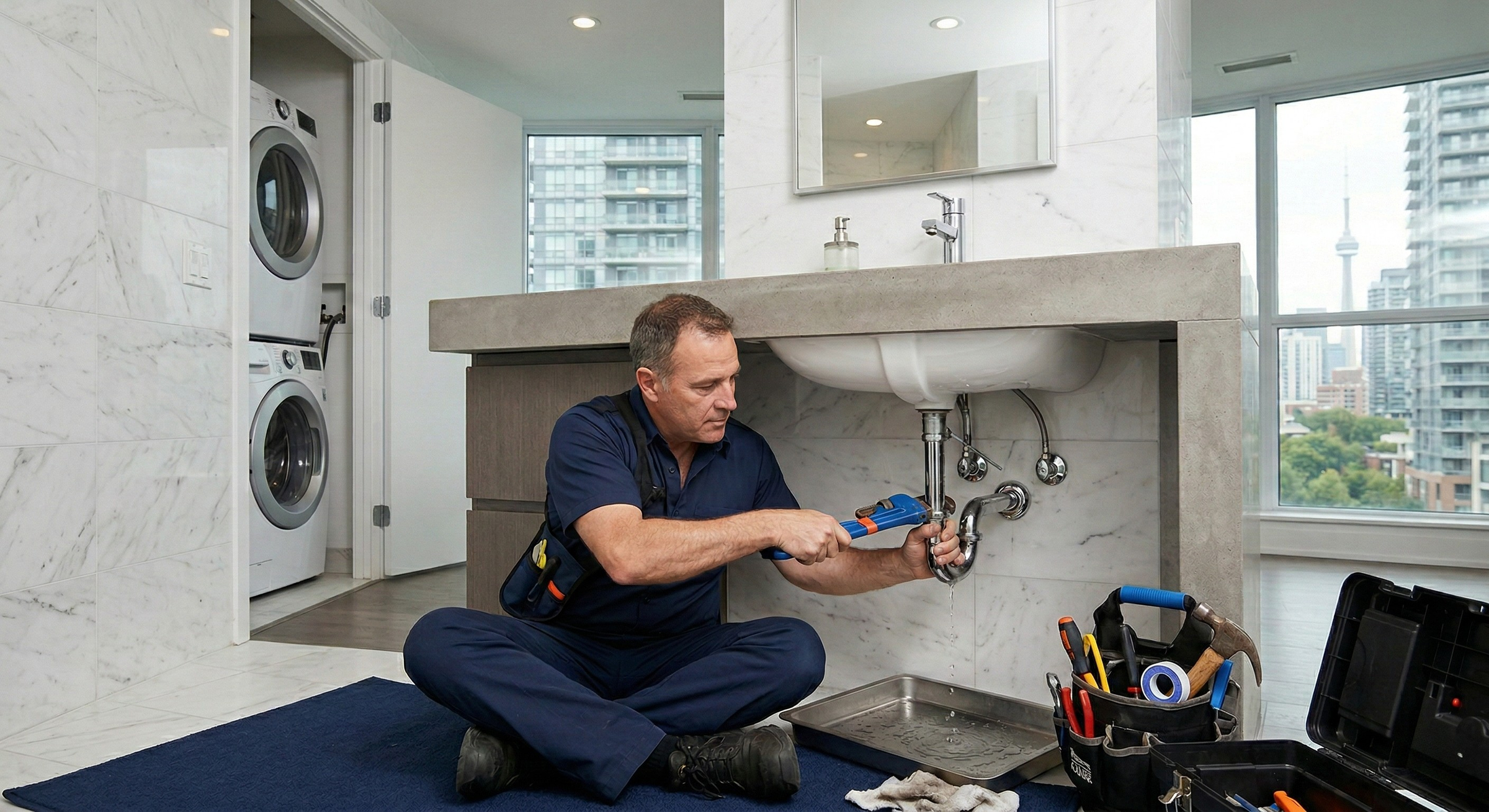
Mississauga has a large and growing stock of condominium apartments, from the towers around Square One and the City Centre to the lakeside buildings in Port Credit and older concrete high-rises spread across the city. Owners in those buildings need the same small jobs as anyone else: a television mounted, shelves hung, a vanity faucet replaced, a closet fitted out or a door that no longer latches properly. What changes in a condo is everything around the job, from who is allowed into the building to what can be drilled.
Condo owners who treat these tasks like house repairs tend to run into trouble with management, neighbours or the corporation’s insurer. A little preparation keeps a straightforward visit from turning into a dispute, a stop-work request from the property manager or a leak that travels several floors down. The points below apply to most buildings, but every corporation has its own rules, and those rules always come first.
Start With the Declaration, By-Laws and Rules
Every Ontario condominium corporation operates under its declaration, by-laws and rules, and together they set out what belongs to the unit owner and what is a common element. The boundary is not always where owners expect. Concrete walls and slabs, balconies, suite entry doors and sometimes windows are commonly treated as common elements or exclusive-use common elements, which means the corporation, not the owner, controls changes to them. Reading the relevant sections before planning any work saves a great deal of back-and-forth.
Most buildings ask owners to submit a written request before alterations, and many require a signed alteration agreement for anything beyond minor work. Hanging pictures and assembling furniture rarely needs approval, but changing flooring, moving plumbing fixtures, mounting something heavy on a concrete wall or altering the entry door often does. The property manager can confirm which category a job falls into, and getting that answer in writing before booking a tradesperson avoids an awkward conversation once the work has started.
Elevators, Insurance Certificates and Quiet Hours in Mississauga Buildings
Practical access is the next hurdle. Many Mississauga condo buildings require trades to register with the concierge or security desk, provide a certificate of liability insurance that names the corporation, and use a booked service elevator with protective pads for anything larger than a toolbox. Some limit contractor parking to a few visitor spaces or a loading area that also has to be reserved in advance, and some ask for the tradesperson’s name and arrival time a day or two ahead.
Working hours are often tighter than the city’s own noise rules. A building may allow drilling and hammering only on weekdays during set daytime hours, with none on Sundays or statutory holidays. With the holiday season approaching, booking early matters, because elevator slots and loading areas can fill quickly with deliveries and move-ins through December. A tradesperson who arrives without the paperwork the building requires can be turned away at the front desk, and the visit is simply lost.
Drilling Into Concrete, Steel Studs and Shared Walls
The structure of a condo changes how things are mounted. Exterior walls, columns, ceilings and many of the walls between suites are concrete, while interior partitions are commonly steel studs covered with drywall. Concrete needs a hammer drill and masonry anchors rated for the load, while steel studs call for toggle-style anchors designed for metal framing rather than the wood screws used in houses. A heavy television, a floating shelf loaded with books or a wall-mounted cabinet has to be matched to what is actually behind the drywall.
Ceilings and floors carry an extra caution. Some concrete buildings use post-tensioned slabs, with steel tendons under high tension running through the concrete, and striking one with a drill can cause serious damage. For that reason many corporations prohibit drilling into slabs altogether or require the area to be scanned and approved first. Ceiling-mounted fixtures, hanging storage and new light locations should be discussed with management before anyone picks up a drill, and any new wiring belongs with a licensed electrician.
Walls shared with a neighbour deserve thought as well. Every opening in a wall between suites weakens its fire and sound separation, so recessed shelving, new electrical boxes or deep fasteners in those walls are best avoided unless the building has approved them. Interior partitions within the suite are usually the better place for heavier items. Where a television has to go on a shared concrete wall, a surface-mounted bracket on short masonry anchors, with cables run in a paintable surface raceway, avoids cutting into the wall at all.
Water, Leaks and the Suite Below
In a house, a leaking supply line damages one home. In a condo, it can damage several. Water from a failed dishwasher connection or a cracked toilet supply runs along the slab and down through pipe and wiring penetrations into suites below, and many declarations and by-laws allow the corporation to pass its insurance deductible to the owner whose unit the leak came from. That makes even simple plumbing fixture work in a condo a job to plan carefully.
Before replacing a faucet, toilet or washing machine hose, find the suite’s shut-off valves. In many buildings they sit behind an access panel in a closet, above a ceiling hatch or under the kitchen sink, and in some older buildings water can only be shut off at the riser by building staff. Braided stainless supply lines, new shut-off valves where the old ones are seized, and a leak sensor under the sink or beside the washer are small upgrades that reduce the risk considerably.
Fire Doors, Balconies, Flooring Underlay and Debris
Suite entry doors in high-rise buildings form part of the fire separation between the unit and the corridor. They are typically fire-rated and fitted with a closer, so drilling them for hooks, adding an unapproved lock or removing the closer can breach both the building rules and fire safety requirements. Owners who want different hardware should ask management which products and installers the building approves, and leave the door itself alone until they have that answer.
Balconies are usually exclusive-use common elements, and most buildings forbid drilling into the balcony slab, the railing or the exterior wall, and limit what can be stored outside. As winter arrives, owners often bring planters and patio furniture indoors and want extra storage in the suite to hold them. Freestanding shelving or a fitted closet system inside the unit is the safer answer, since anything fastened to the balcony structure can conflict with the corporation’s own balcony inspection and repair programs.
Flooring is another common flashpoint. Replacing carpet with hard flooring changes how footsteps travel to the suite below, so many buildings require an acoustic underlay that meets a specified rating and ask for product documentation before work starts. Construction debris also cannot go down the garbage chute in most buildings. Offcuts, old fixtures, packaging and drywall dust need to leave through the service elevator, bagged and carried out, with the corridor carpet protected along the way.
Planning a Smooth Condo Repair Visit
The easiest condo visits are the ones planned as a single, well-documented job. Make a list of everything that needs doing, take photos of the walls and fixtures involved, and confirm with management which items need approval. Book the elevator and parking once the date is settled, and share the building’s rules with whoever is doing the work so nothing comes as a surprise on the day. Keep copies of any approvals and the signed alteration agreement with the suite’s records, since they show exactly what was permitted if questions come up later, including when the unit is eventually sold.
A handyman in Mississauga who regularly works in condo buildings will usually ask about the insurance certificate, the elevator booking and the wall construction before arriving, which is a good sign. The goal is to finish the work in one visit, inside the permitted hours, with hallways protected and the suite left clean. Done that way, small repairs stay small, and relations with the board, the concierge and the neighbours below stay friendly through the winter.


More Stories
Cryotherapy for Arthritis in Toronto: What the Evidence Says About Winter Joint Pain
Fotona 4D, Ultraformer MPT or Morpheus8? Matching Skin Tightening to the Layer That Needs It
Winter Pest Inspection in Stittsville: Reading the Signs Before Spring