
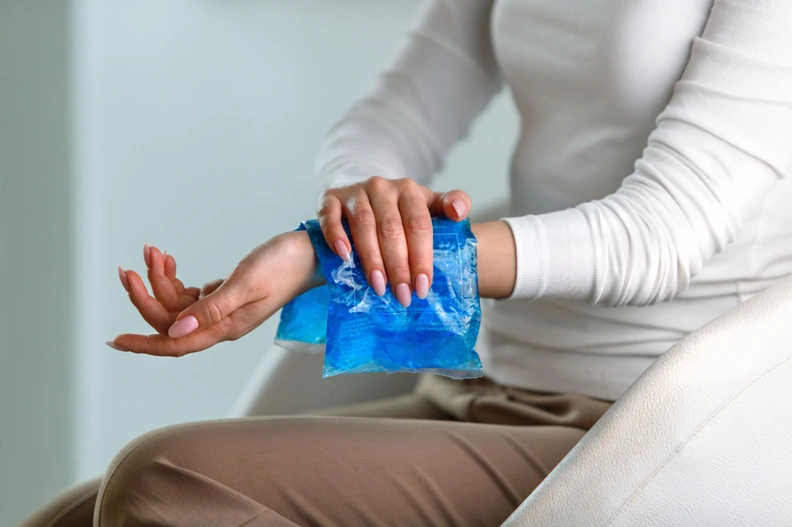
For many people with arthritis in Toronto, the stretch from November to March is the hardest part of the year. Mornings are dark, sidewalks are icy, walks get shorter and stiff joints seem slower to loosen. It is no surprise that this is when many people start looking beyond their usual routine for something that might ease pain and stiffness, and cryotherapy is one of the options they come across.
Cold has a long history in arthritis care, from ice packs on a swollen knee to whole body cold chambers in European rheumatology centres. Cryotherapy may help some people manage symptoms, but it is not a cure, it does not reverse joint damage and it is not suitable for everyone. This guide looks at what cold does to painful joints, what the research shows and how to approach cryotherapy safely alongside medical care.
Why Arthritis Often Feels Worse in a Toronto Winter
Many people with arthritis say they can feel the weather in their joints. Research into the link between weather and joint pain has produced mixed results, with some studies finding a modest association with cold, damp or changing conditions and others finding little effect. Whatever the precise cause, winter changes daily life in ways that matter for joints. People move less when it is dark and slippery, the muscles that support knees and hips lose conditioning, and long hours sitting indoors add to morning stiffness.
There is also the simple discomfort of cold muscles and tendons, which feel tighter until they warm up, and the fear of falling on ice, which keeps many older adults indoors for weeks at a time. For people with inflammatory arthritis such as rheumatoid arthritis, flares can arrive at any time of year and are driven by the disease rather than the weather, so a winter flare should always be discussed with the treating doctor rather than assumed to be seasonal.
How Cold Affects Painful, Inflamed Joints
Applying cold to a joint has several well-understood short-term effects. It narrows blood vessels near the surface, which can reduce swelling in a hot, puffy joint. It slows the speed at which nerves carry pain signals, creating a temporary numbing effect. It can also ease muscle spasm around a painful area. These effects are why cold packs are a long-standing self-care suggestion for flares with heat and swelling, while warmth is often preferred for stiffness without inflammation.
Cryotherapy applies the same principle at a much lower temperature and in a more controlled way. Localized cryotherapy directs a stream of very cold air at a single joint, such as a knee, wrist or shoulder, for a few minutes. Whole body cryotherapy exposes most of the skin to extremely cold, dry air for two to three minutes. Researchers have proposed that the whole body approach may also influence inflammatory signalling throughout the body, but the mechanisms are still being studied and the effect in any one person is difficult to predict.
During a session most people feel intense cold, then tingling, then numbness in the treated area. Some notice that stiff joints move more easily for a while afterward; others notice little change, and both responses are normal. Because cold dulls pain temporarily, it is wise not to push a freshly numbed joint into heavy exercise or an unusually long walk straight away, since the usual warning signals are muted for a while. Gentle movement to rewarm, followed by normal activity once full sensation returns, is the safer pattern.
What Research Shows About Cryotherapy for Arthritis
The evidence is encouraging in places but far from settled. A 2014 systematic review by rheumatologists at a French university hospital pooled six studies involving people with rheumatoid arthritis and reported lower pain scores and lower disease activity scores after repeated cryotherapy, using both local and whole body methods. The authors suggested that cold could be a useful add-on to standard treatment, but stressed that protocols needed to be better defined and tested in stronger trials.
Since then, a randomized controlled trial at a German university rheumatology department added a short course of whole body cryotherapy to an inpatient treatment program for people with active rheumatoid arthritis. Those who received it reported a greater reduction in pain than the comparison group at the end of the program. Broader reviews remain cautious: a 2023 review in the British Medical Bulletin judged the overall quality of clinical research on whole body cryotherapy to be generally low. Evidence for osteoarthritis, the most common form of arthritis, is thinner still, and much of it concerns simple local cold rather than cryotherapy equipment.
Localized or Whole Body Cryotherapy for Arthritis?
The choice between the two approaches depends largely on where the pain is. Someone with osteoarthritis concentrated in one knee, or a flare in a single wrist, may find a localized treatment more practical, because it targets the problem area directly and avoids exposing the whole body to cold. People with pain and stiffness across several joints, which is common in inflammatory arthritis, sometimes prefer whole body sessions because they address everything at once.
Practical considerations matter as well. Whole body sessions involve standing unsupported for a few minutes and stepping in and out of a cabin, which can be difficult for someone with severe hip, knee or ankle arthritis or poor balance. Localized treatment can usually be done seated. Anyone comparing options for cryotherapy for arthritis in Toronto should ask how the studio adapts sessions for limited mobility, which approach staff suggest for their particular joints and why, and how progress will be reviewed over the first few visits.
Hands deserve a specific mention. In whole body sessions the hands and feet are covered with dry gloves and socks to protect them from cold injury, which means the small joints of the fingers and toes receive far less cold than the rest of the body. People whose main problem is arthritis in the hands or fingers may therefore find that a supervised localized treatment is the more logical option to discuss, provided they have no history of Raynaud’s phenomenon or other circulation problems in the hands.
Safety Checks for People Living With Arthritis
Some conditions that often accompany arthritis make cold exposure risky. Raynaud’s phenomenon, in which fingers and toes turn white or blue in the cold, is more common in people with autoimmune conditions such as lupus and scleroderma, and it is a standard reason to avoid cryotherapy. Cold urticaria, significant heart disease, uncontrolled high blood pressure, peripheral arterial disease and reduced sensation from nerve damage, which can occur with diabetes, also call for caution or exclusion, as does pregnancy.
Recent procedures matter too. Anyone who has had a recent injection into a joint, recent surgery or a joint replacement should check with their surgeon or rheumatologist about timing before trying cold treatment on that area. A responsible studio will complete a health questionnaire before the first visit, ask about current medication and conditions, and decline or postpone treatment when the answers raise concerns. Suitability should always be decided at a consultation, and when in doubt, a family doctor or rheumatologist should have the final word.
Making Cryotherapy Part of a Winter Arthritis Plan in Toronto
For those who benefit, cryotherapy works best as one part of a broader plan rather than a replacement for it. Regular exercise remains a cornerstone of arthritis management, and winter does not have to stop it: indoor pools, community centre programs and physiotherapy clinics across Toronto offer ways to keep moving when the sidewalks are icy. Prescribed medication should never be stopped or reduced without speaking to the doctor who prescribed it, even if pain seems to improve after a few sessions.
A simple way to judge whether cryotherapy is helping is to keep a short diary over several weeks, noting pain levels, morning stiffness, sleep and how far it is comfortable to walk. Sharing that record with a physiotherapist or rheumatologist gives them useful information and helps separate genuine change from a good week. If cold sessions bring meaningful relief and fit comfortably alongside other care, they may earn a regular place in a winter routine. If they do not, nothing is lost by stopping, and the diary will still be a useful tool at the next appointment.

More Stories
Handyman Work in Mississauga Condos: Building Rules to Check Before Any Drilling Starts
Fotona 4D, Ultraformer MPT or Morpheus8? Matching Skin Tightening to the Layer That Needs It
Winter Pest Inspection in Stittsville: Reading the Signs Before Spring