
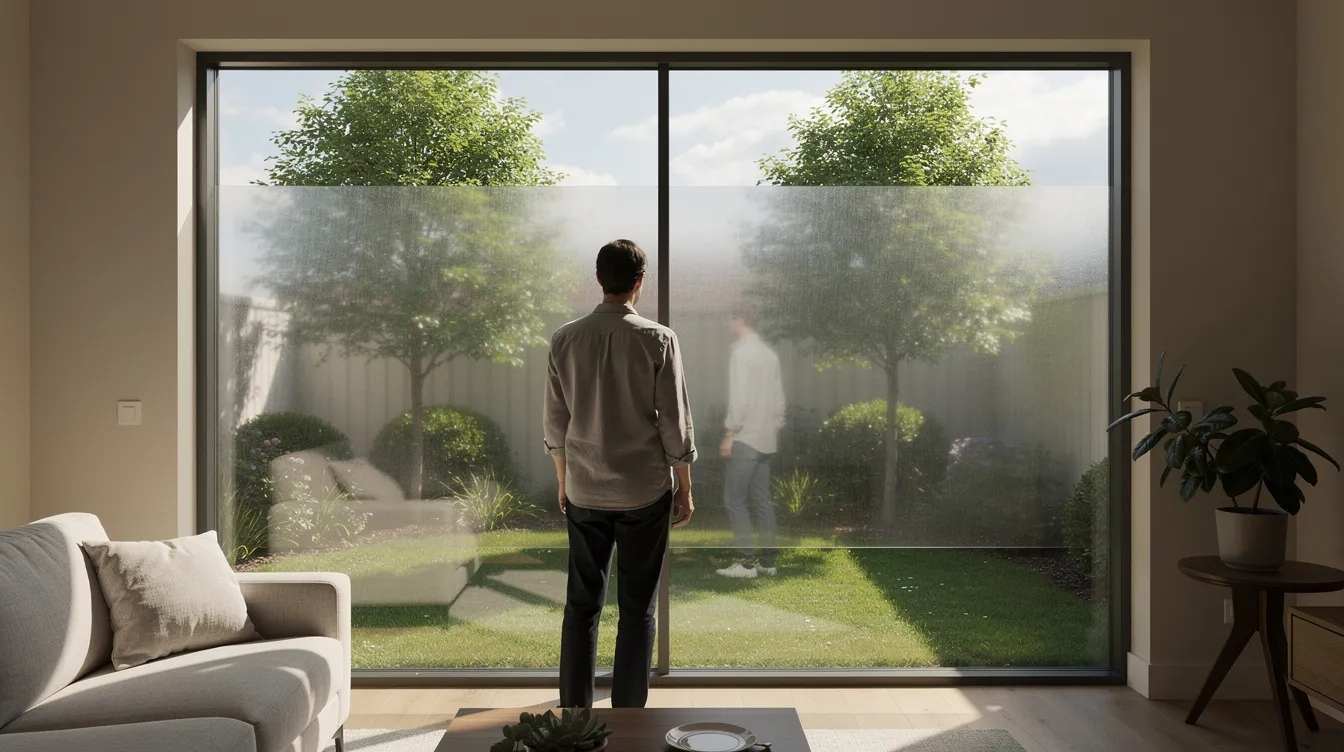
Window film is usually sold as a summer product. It cuts heat, glare and fading when the sun is high and the air conditioner is working hard. So when the first cold snap reaches Vaughan, it is fair to ask whether film does anything useful between December and March, and whether it makes sense to install it in the middle of winter. The honest answer is that film helps with some winter problems, does little for others, and in a few situations can work slightly against you.
Knowing which is which keeps expectations realistic, whether the glass belongs to a family home in Maple or Kleinburg, a condo near the Vaughan Metropolitan Centre, or an office or showroom along Highway 7. The sections below look at where winter heat actually goes, what solar and low-E films can and cannot change, the thermal stress risk on cold sunny days, and what to expect from an installation booked in the colder months.
Where Winter Heat Really Escapes Through a Vaughan Window
A window loses heat in three main ways. Warm room air touches the glass and gives up heat by conduction and convection. The glass also exchanges long-wave infrared radiation with the people and surfaces in the room, which is why sitting beside a large window on a cold night feels chilly even when the thermostat says otherwise. And outside air leaks in around sashes, frames and poorly sealed trim, carrying warmth out with it.
Film only affects the first two, and only partly. It does nothing about drafts. If a window whistles in a north wind, or cold air pools at the bottom of a sliding patio door, the fix is weatherstripping, caulking, adjusting the hardware or replacing worn seals. No film will change that, and anyone suggesting otherwise is overselling the product. In many older homes, air sealing makes a bigger difference to winter comfort than anything applied to the glass.
Solar Control Film and the Low Winter Sun
Standard solar control films are designed to reject a share of the sun’s heat before it enters the room. In July, that is the point. In January, the same film also blocks some of the free warmth that south-facing glass collects on a clear day. For a room that relies on winter sun to feel comfortable, a strongly reflective or dark film can leave it slightly cooler and slightly more dependent on the furnace. The effect is real but generally modest, and it varies with orientation, glass type and the film chosen.
That trade-off does not make solar film a poor winter choice. The sun sits low in the southern sky through an Ontario winter, so it reaches deep into rooms, and snow on the ground reflects extra light back toward the windows. The result is glare on screens and televisions, squinting at the kitchen table, and continued ultraviolet exposure on floors and furniture. Film that cuts glare and blocks most ultraviolet keeps doing that job through the winter months, which matters to anyone who has watched hardwood or upholstery fade near a window.
Spectrally selective films are worth asking about. They let a large share of visible light through while rejecting more of the infrared part of sunlight, so rooms stay bright. They still reduce some winter solar gain, so the decision comes down to which problem is bigger for that window: summer overheating and fading, or winter warmth. West-facing glass and floor-to-ceiling condo windows usually lean one way, while a south-facing family room that feels pleasant in winter may lean the other.
Low-E Retrofit Film and Condensation: Modest Gains on the Right Glass
A separate category of film is designed with winter in mind. Low-emissivity, or low-E, retrofit films have a surface that reflects long-wave infrared heat back toward the room instead of absorbing it and passing it outward. On single-pane glass, or on older clear double-pane units without a factory low-E coating, they can improve the window’s insulating performance and make the area near the glass feel more comfortable.
The gains shrink on glass that already has a low-E coating, which describes most windows in newer Vaughan subdivisions and condo towers. Adding a second low-E layer brings a smaller improvement, and the case depends on the specific glass and film. There is also a side effect worth knowing. Because a room-side low-E surface keeps heat in the room rather than letting the glass absorb it, the inner pane can stay a little cooler, so windows that already fog up during cold snaps may not improve and can be slightly worse.
Condensation is caused by indoor humidity meeting a cold surface, and film does not cure it. Lowering humidity, running bathroom and kitchen fans, keeping air moving across the glass and leaving blinds or shades open enough for warm room air to reach the window are the practical fixes. A home with persistent condensation on newer windows usually has a humidity problem to solve before film is considered.
Thermal Stress, Double-Pane Glass and Cold Sunny Days
Cold, bright days are when thermal stress matters most. When sun strikes a window, the centre of the glass warms while the edges, held in a cold frame, stay cold. Glass expands as it warms, and a large enough difference between centre and edge can crack a pane. Film increases the amount of solar energy the glass absorbs, so a dark or highly absorptive film on the wrong glass can widen that temperature difference. Partial shade from an overhang, a balcony above or a tree trunk adds to the risk, because part of the pane heats while the rest stays in shadow.
Sealed double-pane units bring a second consideration. Some window manufacturers limit their warranties when film is applied, and an absorptive film raises the temperature of the sealed unit. That is why reputable installers check each film against the manufacturer’s film-to-glass compatibility guidance, taking into account glass type, size, thickness, any tint or coating, and the frame. A careful quote for window film in Vaughan names the film, confirms that each window has been checked for compatibility and notes any window warranty implications before installation is booked.
Installing Window Film in a Vaughan Winter
Window film is installed on the inside of the glass, so the work can go ahead in any season. The weather mainly affects curing. Film is applied over a water-based mounting solution, and that moisture has to escape through the film before the adhesive reaches full strength. On warm, sunny days this happens quickly. In winter, with cold glass and short, grey days, it takes longer, and a light haze or small water pockets may be visible for several weeks. This is normal and clears on its own, but the film should not be cleaned or pressed during the cure period the installer gives.
Film manufacturers also set minimum glass temperatures for installation, and a careful installer will check the glass on very cold days, particularly on large north-facing windows. Inside, the room should be warm and reasonably dust-free, with furniture, blinds and plants near the glass cleared beforehand. For businesses, the weeks between the holidays and spring can be a practical time for commercial work, and installers can often work early or after hours so staff and customers are not disturbed.
Privacy and Security Film for Long Winter Evenings
Winter changes privacy as well as heat. With darkness falling before five o’clock in December, rooms are lit from inside for much of the evening, and anyone outside can see in clearly. Reflective films that give daytime privacy reverse at night, because they only work when the outside is brighter than the inside. For bathrooms, street-facing rooms and ground-floor offices that need privacy after dark, frosted or decorative film is the dependable choice, since it obscures the view in both directions at any hour while still letting daylight through.
Long, dark evenings also give a would-be intruder more cover, and patio doors, sidelights and basement windows are common weak points in Vaughan homes. Security film holds broken glass together and slows forced entry, which makes it a sensible winter project that has nothing to do with heat at all. Deciding what each window actually needs, rather than buying one film for the whole house, is the most reliable way to get value from film in any season.


More Stories
Cryotherapy for Arthritis in Toronto: What the Evidence Says About Winter Joint Pain
Handyman Work in Mississauga Condos: Building Rules to Check Before Any Drilling Starts
Fotona 4D, Ultraformer MPT or Morpheus8? Matching Skin Tightening to the Layer That Needs It