
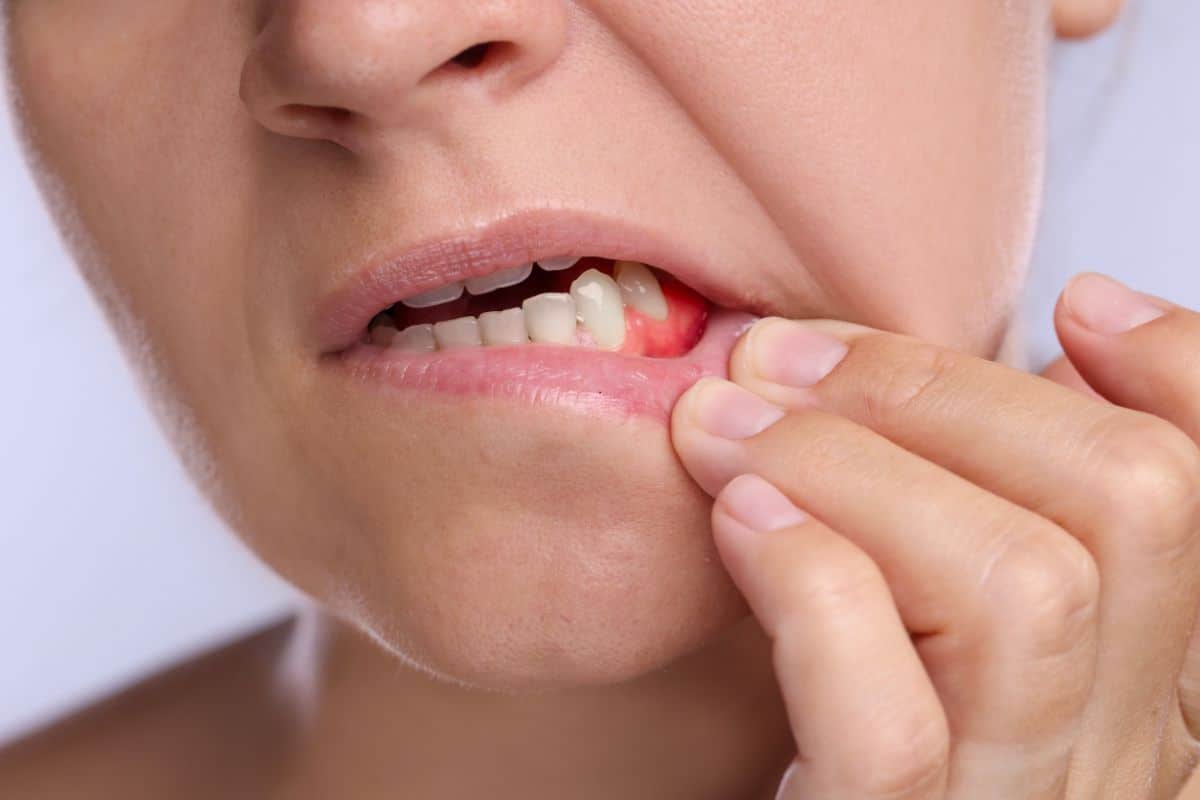
A little blood when brushing is something most people notice and then immediately forget. It gets rinsed away, the toothbrush gets put down, and the moment passes without much consideration. For a significant number of Australians, this happens regularly, and regularly gets dismissed as normal.
It is not normal. Healthy gums do not bleed during routine brushing or flossing. When they do, the bleeding is a signal, and like most signals the body sends, it becomes considerably more important the longer it goes unacknowledged.
What Gum Bleeding Is Actually Telling You
Bleeding gums are almost always a sign of inflammation. The most common cause is gingivitis, the earliest stage of gum disease, where plaque that has not been adequately removed begins to irritate the gum tissue. The gums become swollen, tender, and more prone to bleeding because the blood vessels close to the surface are responding to bacterial activity along and beneath the gum line.
The reason so many people dismiss this is that gingivitis is often painless. There is no ache, no obvious discomfort, nothing that registers as a problem in the way a toothache does. The only indication that something is wrong is the blood, and because it disappears quickly and does not seem to cause any harm, it is easy to rationalise as a consequence of brushing too hard or using a firm-bristled brush.
Sometimes that rationalisation is followed by brushing more gently to avoid the bleeding. This makes the underlying situation worse, not better, because reduced brushing allows more plaque to accumulate at the gum line, which increases the inflammation and makes the gums more reactive over time.
Early-Stage vs Advanced Gum Disease: The Difference in Outcomes
Gingivitis is reversible. This is one of the more important facts about gum disease, and one that provides a strong reason to act early rather than wait. With professional cleaning and improved home care, the gum tissue can return to a healthy, non-inflamed state without any permanent damage having occurred.
The same cannot be said for periodontitis, the advanced form of gum disease that develops when gingivitis is left unmanaged. At this stage, the infection moves below the gum line and begins to affect the bone and connective tissue that hold the teeth in place. Pockets form between the teeth and gums, deepening over time as more tissue is destroyed. Teeth may become loose, shift position, or in severe cases, require extraction.
What makes this progression particularly difficult is that it tends to happen slowly and without significant pain. People can move from early gingivitis to moderate periodontitis over a period of years without ever experiencing anything they would describe as a dental emergency. By the time mobility or obvious recession makes the problem undeniable, a meaningful amount of damage has already occurred.
Reversing that damage is not straightforward. Unlike gingivitis, the bone loss associated with periodontitis cannot be fully restored. Treatment at the advanced stage is about halting progression and managing what remains, not returning the mouth to where it was before the disease took hold.
Systemic Health Links People Do Not Expect
The connection between gum disease and general health is one of the more significant findings to come out of dental research over the past few decades, and it remains underappreciated by the general public.
The mouth is not a separate system. It is connected to the rest of the body, and chronic bacterial infection in the gums does not simply stay confined to the mouth. Research has established associations between periodontal disease and cardiovascular conditions, including heart disease and stroke. The current understanding is that inflammation and bacteria from the gums can enter the bloodstream and contribute to the inflammatory processes involved in arterial disease.
The relationship with diabetes is particularly well-established and runs in both directions. People with poorly controlled diabetes are more susceptible to gum infections because elevated blood sugar impairs the immune response. At the same time, severe gum disease appears to interfere with blood sugar regulation, making diabetes harder to manage. Treating periodontal disease in diabetic patients has been shown in multiple studies to have a measurable positive effect on glycaemic control.
Respiratory health is another area of concern. Bacteria from the mouth can be inhaled into the lungs, which is particularly relevant for older adults or people with existing respiratory conditions. Pregnancy complications including premature birth and low birth weight have also been associated with untreated gum disease, making periodontal care especially important during pregnancy.
None of this means that gum disease causes these conditions in a direct, one-to-one sense. What it means is that the mouth is not isolated, and the chronic low-grade infection that gum disease represents has effects that extend beyond the teeth and gums themselves.
What Happens When Gum Disease Is Left Untreated
The trajectory of untreated gum disease follows a predictable pattern, even if the pace varies between individuals. Gingivitis progresses to periodontitis. Bone loss accumulates. Gum tissue recedes further. Teeth that were once stable begin to shift or loosen. The cost and complexity of treatment increases at each stage.
There is also an aesthetic dimension that becomes more pronounced over time. Receding gums alter the appearance of the smile significantly. Teeth look longer, gaps appear between them, and the overall presentation changes in ways that are not easy to reverse.
Beyond aesthetics, advanced gum disease affects chewing, comfort, and the confidence to speak and smile without self-consciousness. These are not minor quality-of-life issues. They have real effects on how people feel in professional and social situations.
How a Dental Clinic Assesses and Manages Gum Conditions
Assessment of gum health is more thorough than many people expect. A reputable dental clinic in Sydney will use periodontal probing to measure the depth of the pockets between the teeth and gums, which gives a precise indication of how far below the gum line any disease has progressed. X-rays provide a view of the bone levels supporting the teeth, which cannot be assessed by visual examination alone.
From that assessment, treatment is calibrated to the stage of the disease. Gingivitis typically responds well to a professional scale and clean combined with detailed instruction on home care technique. Periodontitis at a more advanced stage requires deeper cleaning procedures, sometimes referred to as root planing or debridement, which remove bacterial deposits from below the gum line and smooth the root surface to discourage reattachment of bacteria.
In cases where pockets are too deep to manage with non-surgical cleaning, periodontal surgery may be considered to allow better access and facilitate healing. Ongoing maintenance appointments are an important part of managing the condition long-term, because gum disease, once established, requires consistent monitoring to prevent recurrence.
A Little Blood Is Your Mouth Asking for Help
Bleeding gums are easy to ignore precisely because they seem so minor. There is no sharp pain, no obvious emergency, nothing that demands immediate attention in the way that other health symptoms do.
But the mouth rarely shouts. It tends to whisper, and the blood that appears during brushing and gets rinsed away without a second thought is one of those whispers. It is an early indication that something in the gum environment is not right, and it is worth far more attention than it typically receives.
The gap between gingivitis and serious periodontal damage is bridged entirely by time and inaction. A condition that is completely reversible at one stage becomes a lifelong management challenge at another. That gap, and the outcomes on either side of it, is reason enough to take a small amount of blood far more seriously than most people currently do.




More Stories
Cards, wallets and casino account payments at Crystalroll: a concise overview of the general principles
Lunarspins – Bonukset, edut ja pelivalikoima: Casino games ja bonusominaisuudet: käytännöllinen katsaus kasinon perustoimintoihin
Crypto and Blockchain: Exploring the Next Wave of Digital Innovation