
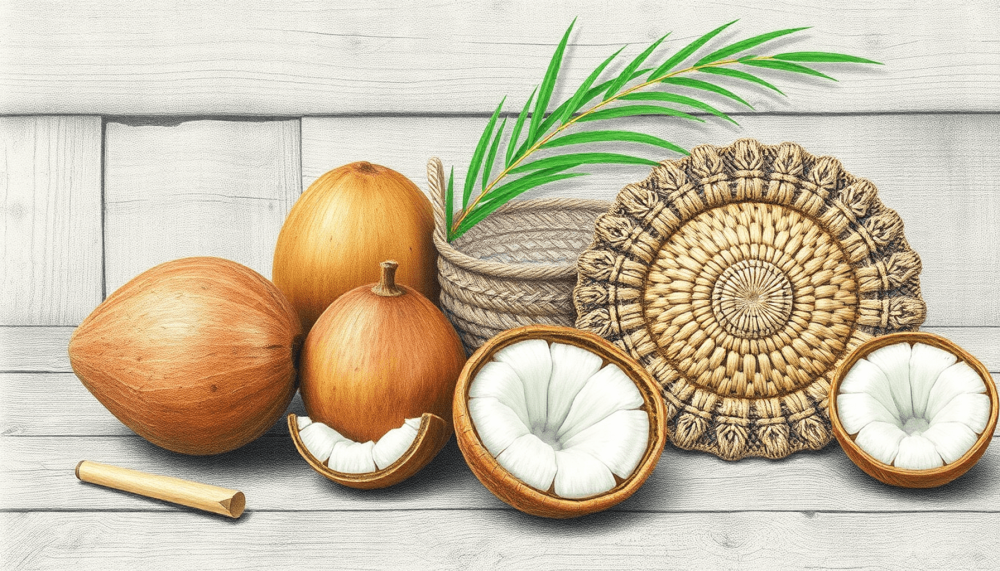
As industries around the world continue to explore environmentally responsible materials, natural coconut-based products are gaining greater attention. Coconut husks, which are generated during coconut processing, contain strong natural fibers that can be transformed into a variety of useful products. These materials combine practical functionality with renewable sourcing, making them attractive for agriculture, landscaping, erosion control, packaging, and other applications.
Among the most versatile coconut-derived materials are processed coco husk fiber and coconut fiber mats. Their natural characteristics allow them to serve different purposes while providing an alternative to certain synthetic materials.
Understanding Coco Husk Fiber
Coco husk fiber is obtained from the fibrous outer portion of coconuts. Through appropriate processing, the husk can be separated into usable fibers that are cleaned, dried, and prepared for various applications.
The natural strength of coconut fiber makes it particularly valuable where durability and flexibility are required. Its fibrous structure can be processed into different forms depending on the intended use, including mats, ropes, erosion-control materials, growing products, and other natural-fiber applications.
One of the major advantages of coco husk fiber is its renewable origin. Coconut production generates large quantities of husks, creating an opportunity to transform an agricultural by-product into a commercially useful material. This approach can contribute to better resource utilization while reducing the amount of coconut waste that remains unused.
The quality of the final fiber depends heavily on processing. Proper separation, cleaning, drying, and grading can help manufacturers produce material with more consistent characteristics.
Natural Strength and Versatility
Coconut fiber has several physical properties that make it suitable for demanding applications. The fibers are relatively strong, resilient, and capable of maintaining their structure under different environmental conditions.
These characteristics are particularly useful in landscaping and environmental projects. Natural coconut fibers can be formed into structures that help protect soil surfaces while allowing vegetation to establish.
The material can also be adapted for agricultural applications. Depending on the processing method, coconut fiber may be incorporated into growing systems, used as a structural component, or converted into specialized horticultural products.
Because of this versatility, buyers should select products according to their specific application rather than treating all coconut fiber materials as identical.
The Role of Coconut Fiber Mats
A coconut fiber mat is created by arranging and binding coconut fibers into a structured sheet. These mats can be manufactured in different densities, dimensions, and configurations depending on their intended purpose.
One common application is erosion control. When placed over exposed soil, natural fiber mats can help reduce the impact of rainfall and surface water while supporting the early stages of vegetation growth. As plants become established, the mat can work alongside the developing root system.
Coconut fiber mats can also be used in landscaping and slope stabilization projects. Their natural appearance makes them suitable for environments where developers want functional erosion protection without introducing visually intrusive synthetic materials.
Benefits for Erosion Control
Soil erosion can become a serious concern on slopes, construction sites, riverbanks, and areas where vegetation has been removed. Rainfall can loosen exposed soil and transport sediment into surrounding areas.
Natural fiber mats provide a physical layer between the soil surface and environmental forces. They can help slow surface water movement and protect newly seeded areas during vegetation establishment.
Over time, biodegradable coconut-based materials can naturally break down. This characteristic can make them particularly appealing for projects designed around vegetation recovery and environmentally conscious landscaping.
However, the appropriate mat specification depends on factors such as slope angle, rainfall intensity, soil characteristics, vegetation type, and project duration. Professional project planning should therefore determine the suitable material and installation method.
Why Choose Coconut-Based Materials?
The growing interest in coconut-based products is closely connected to sustainability. Instead of relying exclusively on petroleum-based materials, industries can incorporate renewable agricultural resources into certain applications.
Coconut husks provide an especially useful raw material because they are widely available in coconut-producing regions. Processing these husks into fiber creates additional value while supporting more efficient use of agricultural resources.
For buyers, natural coconut products can offer a combination of functionality, renewable sourcing, and biodegradability. These characteristics are increasingly relevant as businesses and project developers evaluate the environmental impact of the materials they use.
Selecting a Reliable Coconut Fiber Supplier
When purchasing coconut fiber products, buyers should evaluate several factors beyond price. Fiber quality, processing methods, moisture levels, dimensions, density, packaging, and consistency can all influence product performance.
For customers looking for coco husk fiber, it is important to understand the intended application before selecting a specific grade or specification. Different projects may require different fiber characteristics.
Similarly, buyers searching for a coconut fiber mat should consider the project’s environmental conditions and technical requirements. The thickness, density, size, and construction of the mat can influence how effectively it performs in a particular application.
Working with an experienced supplier can make the purchasing process easier by providing clearer product specifications and helping international buyers understand available options.
A Practical Natural-Fiber Solution
Coconut fiber demonstrates how agricultural resources can be transformed into practical materials for modern industries. From raw processed fiber to specialized mats, coconut-based products can contribute to applications ranging from agriculture and landscaping to environmental protection.
As demand for renewable materials continues to increase, products made from coconut husks are likely to remain relevant. Their natural strength, versatility, and biodegradable characteristics provide useful advantages for businesses seeking more sustainable material solutions.
For more information about our coconut fiber products and coconut fiber mats, please contact our team:
Visi Arlion International PVT LTD
WhatsApp: (+62)812 1233 3590 (Ms. Maria)
Email: [email protected]




More Stories
Cards, wallets and casino account payments at Crystalroll: a concise overview of the general principles
Lunarspins – Bonukset, edut ja pelivalikoima: Casino games ja bonusominaisuudet: käytännöllinen katsaus kasinon perustoimintoihin
Crypto and Blockchain: Exploring the Next Wave of Digital Innovation