
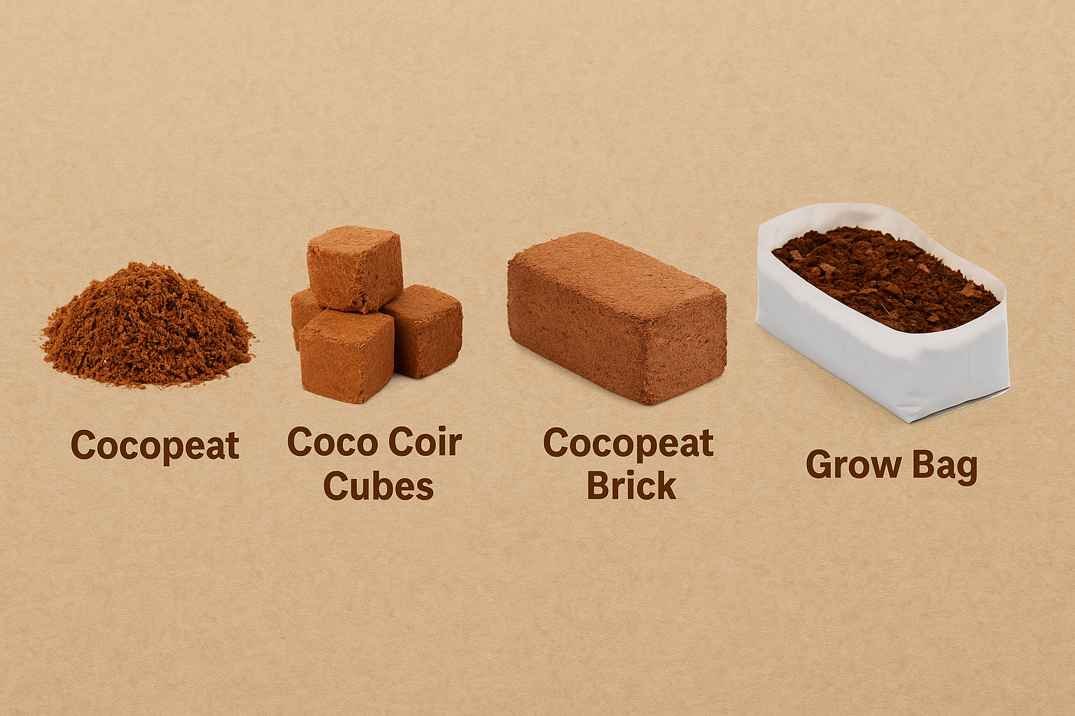
Coconut processing creates more than just food and beverages. After coconuts are harvested and processed, the husk that surrounds the coconut shell can also become a valuable raw material. With the right processing methods, this natural material can be transformed into practical products for gardening, home living, agriculture, and other everyday applications. Understanding a coco husk product list can help consumers, gardeners, businesses, and environmentally conscious buyers discover useful alternatives made from renewable resources.
Coconut husks are naturally fibrous and have properties that make them suitable for many applications. Instead of treating discarded husks as unwanted agricultural residue, manufacturers can process them into materials that have both practical and environmental value. This approach supports better resource utilization while creating products that can serve different needs.
What Is Coconut Husk?
Coconut husk is the thick fibrous layer found between the outer surface of a coconut and its hard inner shell. It contains natural fibers and other organic materials that can be separated and processed into different forms.
Traditionally, coconut husks have been used for ropes, mats, brushes, and other fiber-based products. Modern processing has expanded these applications, allowing coconut husk materials to become useful in horticulture, gardening, household products, and sustainable home solutions.
Because coconut is widely cultivated in tropical regions, coconut husk is also an abundant renewable resource. Turning it into useful products can help reduce unnecessary agricultural waste while giving the material a second purpose.
Exploring Coconut Husk Products
A coco husk product list can include several types of materials and finished products depending on how the husk is processed. Some are designed for plant cultivation, while others are intended for household and lifestyle applications.
Coco fiber is one of the most recognizable products made from coconut husk. The strong natural fibers can be processed into materials used for mats, brushes, ropes, erosion-control products, and other applications. Their natural texture and durability make them useful in situations where a plant-based alternative is preferred.
Another important material is coco peat, which is produced from the finer portion of coconut husk. It is commonly used as a growing medium because it can hold moisture while maintaining an airy structure around plant roots. Gardeners and growers often use it for seed starting, container gardening, nursery plants, and soil improvement.
For a closer look at coconut husk-based materials and available products, visit the coconut husk product collection.
From Coconut Waste to Useful Products
The term coconut waste can sometimes create the impression that the material has little value. In reality, many parts of the coconut can be utilized when appropriate processing and production methods are applied.
A coconut waste product can be created from materials that would otherwise be discarded during coconut processing. Coconut husk is one example, while coconut shells and other coconut-derived materials can also be incorporated into different products.
This transformation is part of a broader circular approach to resource management. Instead of using a raw material once and discarding the remaining parts, manufacturers can find additional applications for materials generated during agricultural and food-processing activities.
For consumers, choosing products made from coconut-derived materials can also be an opportunity to explore natural alternatives for everyday needs. The specific environmental benefits depend on how the products are sourced, processed, transported, and ultimately used, but utilizing agricultural by-products can contribute to more efficient resource use.
Coconut Waste Products in Gardening
Gardening is one area where coconut-derived materials have become especially popular. Coco peat, for example, can be used as a growing medium for many types of plants.
Its ability to retain moisture can be useful for gardeners who want a medium that does not dry out as quickly as some conventional materials. At the same time, its fibrous structure can provide spaces for air around plant roots.
Coconut husk fiber can also be used in gardening and landscaping applications. Depending on its form, it may be incorporated into planting systems, garden accessories, protective materials, or erosion-control solutions.
These applications demonstrate how coconut waste products can move beyond their original agricultural context and become useful materials for plant cultivation and outdoor activities.
Coconut Husk Products for Home and Living
The potential of coconut materials is not limited to agriculture. Processed coconut fibers and other coconut-based materials can also be incorporated into products designed for home and living.
Natural textures are increasingly appreciated in interior and lifestyle products because they can complement simple, earthy, and tropical-inspired spaces. Coconut-derived materials can be used in items such as household accessories, decorative products, organizers, and other practical home solutions.
The coco home and living collection provides an example of how coconut-based materials can be developed into products beyond traditional gardening applications.
Using plant-based materials in household products can also give consumers another way to consider renewable resources when selecting everyday items. Product durability, construction, maintenance requirements, and sourcing remain important factors when choosing any sustainable alternative.
Why Coconut Husk Has Long-Term Potential
Coconut husk is an interesting agricultural material because it combines availability with versatility. A single coconut husk can contain fibers and other components that can be processed for different purposes.
As interest in resource efficiency continues to grow, materials that were once considered agricultural by-products may receive greater attention. Businesses can explore new applications, while consumers can discover products that make use of naturally available resources.
The development of coconut-based products also creates opportunities for local agricultural communities and manufacturers. Processing, manufacturing, packaging, and distribution can create additional value around a resource that might otherwise have limited use.
Choosing the Right Coconut-Based Product
When exploring a coco husk product list, it is useful to consider the intended application first. Gardeners may be interested in coco peat or other horticultural materials, while households may prefer finished home and living products made from coconut-derived materials.
It is also important to consider product specifications, processing methods, quality, packaging, and intended use. Not every coconut-based product is designed for the same purpose, so checking the manufacturer’s information can help buyers select the appropriate option.
Ultimately, coconut husk demonstrates how agricultural materials can be transformed into useful resources. From horticulture and gardening to household applications, the possibilities show that what was once viewed simply as coconut waste can become part of a broader product ecosystem.
Contact Our Team
For more information about coconut husk materials, coconut-based products, and available solutions, please contact our team:
Visi Arlion International PVT LTD
WhatsApp: (+62)812 1233 3590 (Ms. Maria)
Email: [email protected]




More Stories
Cards, wallets and casino account payments at Crystalroll: a concise overview of the general principles
Lunarspins – Bonukset, edut ja pelivalikoima: Casino games ja bonusominaisuudet: käytännöllinen katsaus kasinon perustoimintoihin
Crypto and Blockchain: Exploring the Next Wave of Digital Innovation